


How to Fix Damaged Hair: What to Change in Your Routine First
Damaged hair cannot be rebuilt overnight, and Maria Nila notes that it can be difficult to save, but you can protect and strengthen it so it breaks less. Start by cutting off split ends, using heat protection every time you style and adding a bond builder made for damaged hair. Maria Nila's Structure Repair range will help get your hair back to it's best shape.
What is damaged hair?
Damaged hair has a worn-down structure, which is different from hair that is simply dry or frizzy, according to Maria Nila. When the outer layer of overlapping keratin scales is healthy, hair has a smooth, light-reflecting surface and shine. When it is destroyed, the hair looks dull, rough and dry, tangles and splits easily.
How can you start repairing damaged hair?
Strengthen, moisturize and protect: use hair masks and bond builder regularly, always use heat protection and give your hair a rest from stress. Here is a routine to start with.
1. Give your hair a rest from heat and styling
Use heating tools as rarely as possible and be careful with styling products that contain dehydrating substances. Consider whether you really need lots of styling products to get structure or volume, or if you can skip them for a while.
2. Use heat protection every time
Apply Cream Heat Spray to damp, towel-dried hair before blow-drying or heat styling, or to dry hair before hot tools, section by section. Maria Nila describes it as a nourishing, cream-based heat protectant that adds moisture. Consumer testing experts say heat protectants really work, because they coat hair, mask the degraded surface of damaged hair and improve manageability, which results in less breakage.
3. Add a hair mask
Apply Structure Repair Masque to newly washed hair, leave it in for 5 to 10 minutes, rinse and follow up with conditioner. Maria Nila recommends repeating at least 1 to 2 times per week, or using it as a daily treatment.
4. Finish with Bond Builder
Apply Structure Repair Leave In Cream to towel-dried hair and do not rinse it out. It provides moisture and nutrition and, according to Maria Nila, seals split ends.
5. Treat wet hair gently
Water makes hair more fragile, so be extra careful when it is damp or wet. Do not brush wet hair, shower in lukewarm or cold water and never go to bed with wet hair.
Which Maria Nila products are made for damaged hair?
Structure Repair is tailored for damaged and chemically treated hair, while True Soft is suitable for naturally dry hair, according to Maria Nila. The Structure Repair products use repairing algae extract, which adds softness and luster.
What is in the Structure Repair range and what else helps?
- Structure Repair Shampoo, Conditioner, Leave In Cream and Mask make up the range.
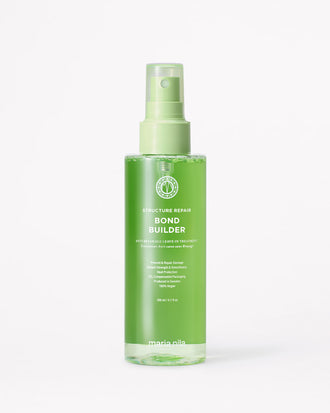
- Bond Builder is a lightweight leave-in treatment for damaged hair that repairs damaged hair bonds and reduces breakage, with heat protection up to 450°F.
- True Soft Argan Oil absorbs quickly, softens and smooths, and reduces frizz.
Bond Builder can be used in different ways: in damp hair for deeper repari – after shampooing and conditioner, or instead of mask and conditioner. It can also be applied to dry hair for daily protection.
How do you fix bleached or chemically treated hair?
Bleaching can deprive hair of its natural protective oils and fibers and open its outer layer, which is why bleached hair often looks less shiny, feels dry and brittle and tangles easily. Maria Nila suggests these ways to fix it.
- Cut off split ends to avoid further breakage.
- Moisturize with argan oil to rehydrate hair and smooth the cuticle.
- Use products with UV protection, because bleached hair is even more sensitive to UV damage.
- Use the Structure Repair range, which is adapted for chemically treated hair.
True Soft Argan Oil goes on damp or dry hair from mid-lengths to ends.
Can damaged hair be fully repaired?
Not always. Maria Nila says severly damaged hair can be difficult to save and that the best way is to have your hair cut or trimmed. Use the Bond Builder to help repair damaged hair bonds, strengthen the hair fiber, and protect against future damage caused by heat styling, color treatments, and everyday stressors. The Bond Builder targets weakened hair bonds to help restore strength, resilience, and overall hair health. Hair feels stronger and more resistant to breakage with continued use.
How can you prevent more damage?
Make a few small changes in your everyday routine, such as these tips from Maria Nila.
- Cut the ends regularly to get rid of the most damaged parts.
- Use heating tools as rarely as possible.
- Be careful with styling products that contain dehydrating substances.
- Do not brush your hair when it is wet.
- Shower in lukewarm or cold water.
- Do not go to bed with wet hair.
Related reading: How to fix and take care of damaged, Hair Products for Damaged Hair, and hair masks for damaged hair.
How often should I use a hair mask for damaged hair?
Maria Nila says to use Structure Repair Masque at least 1 to 2 times per week, or as a daily treatment, and to leave it in for 5 to 10 minutes on newly washed hair.
Can I use heat protection on damp and dry hair?
Yes. Cream Heat Spray can be used on both damp and dry hair and provides more moisture than the lighter Quick Dry Heat Spray.
How do I get rid of split ends?
Only cutting removes them, according to a medical information site. Structure Repair Leave In Cream is described as sealing split ends and adding moisture, but trimming is what removes them.
What is the difference between Structure Repair and True Soft?
Structure Repair is tailored for damaged and chemically treated hair, while True Soft is suitable for naturally dry hair.
Are Structure Repair products vegan?
Yes. Structure Repair Shampoo, Masque and Leave In Cream are each labeled 100% vegan.
Shop Products for Damaged Hair


